Bogotá, Colombia
2022
12224m² Ver fotos >|
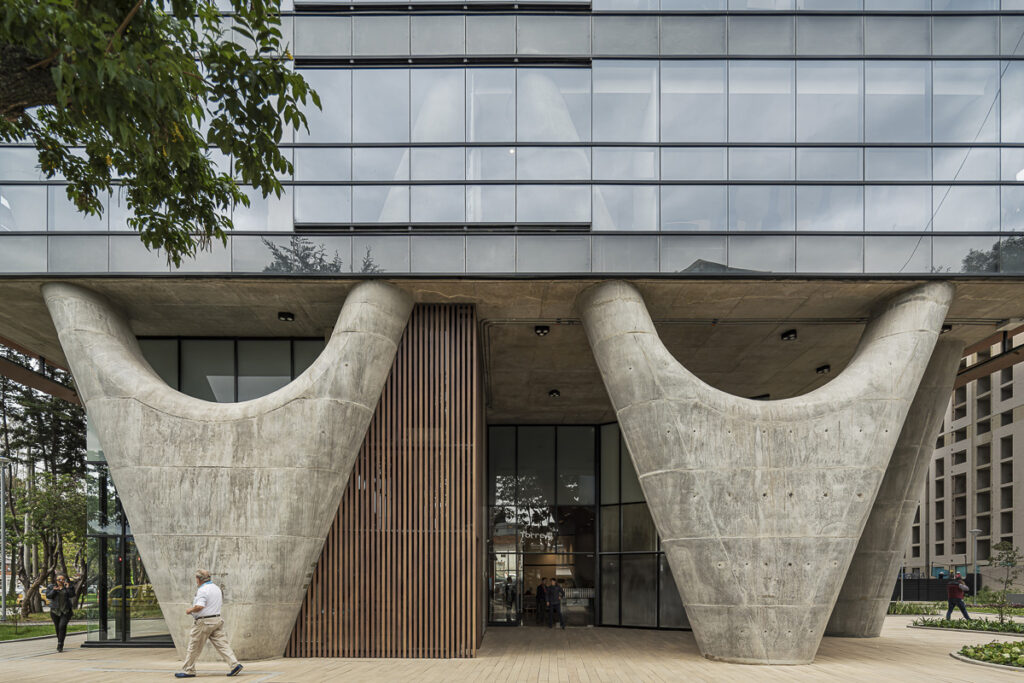
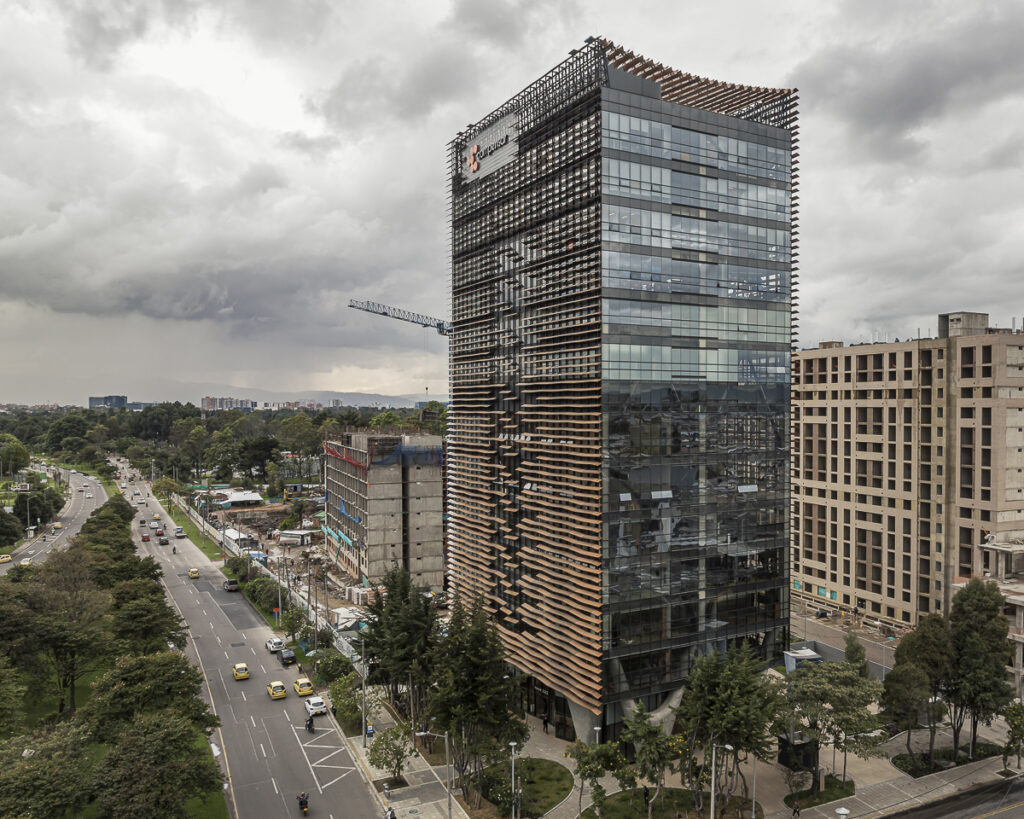
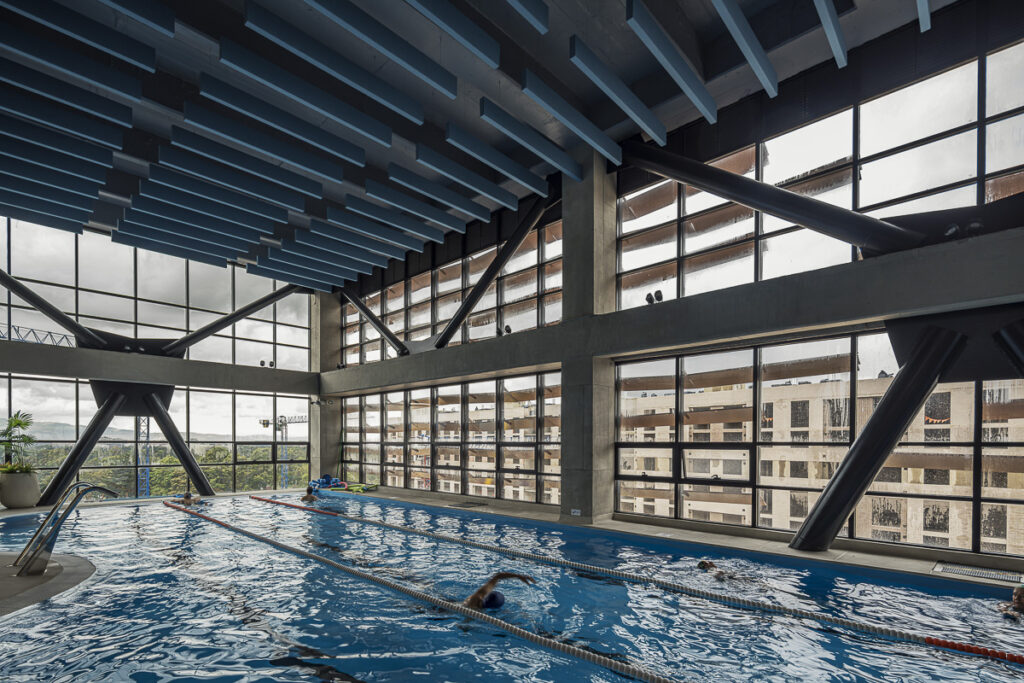
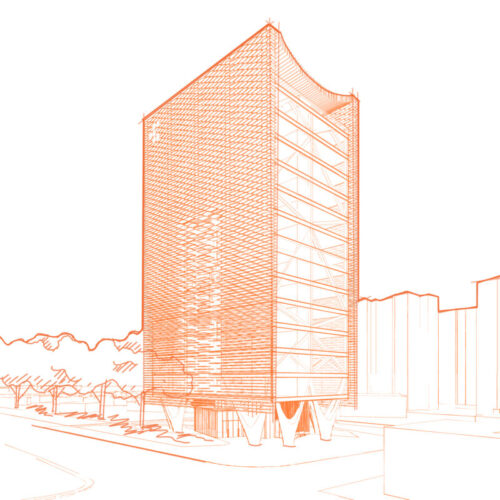
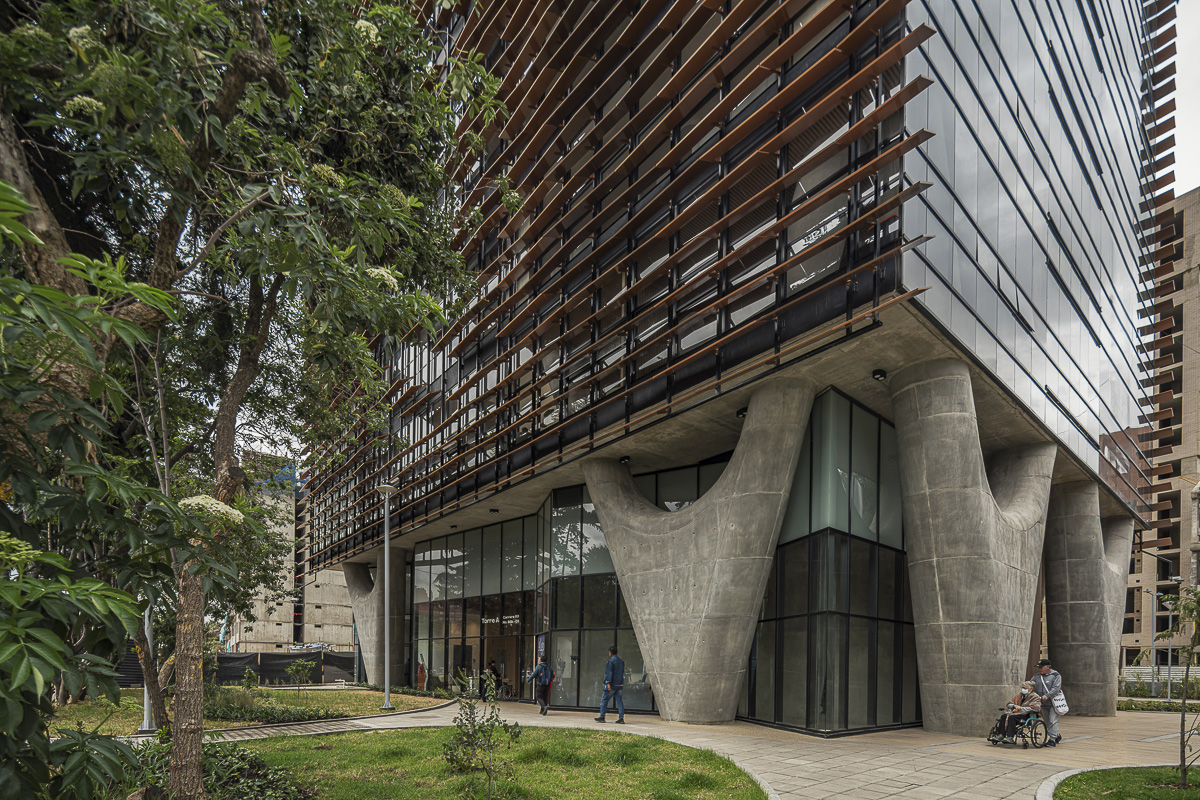
El proyecto se integra directamente a la red ecológica del Parque Metropolitano Simón Bolívar, funcionando como un puente biológico entre los cerros orientales y el humedal El Salitre. El primer piso actúa como un bioma abierto a la ciudad, donde se restablece la conectividad ecológica mediante la recreación de ecosistemas de bosque sabanero y humedal, generando hábitats para fauna local y diversidad vegetal. Una plaza esquinera permeable conecta el edificio con el espacio público, diluyendo sus límites y articulando arquitectura, paisaje y urbanismo.
Tres patios interiores representan ecosistemas colombianos:
Patio 1: ecosistema de páramo, fundamental para la producción de agua y hogar de especies como los frailejones.
Patio 2: ecosistemas xéricos similares a La Guajira y El Tatacoa, con vegetación seca y cactus.
Patio 3: bosque seco tropical, uno de los biomas más escasos y amenazados del país.
La cubierta y el primer nivel incorporan vegetación endémica de la sabana, extendiendo los sistemas naturales cercanos y funcionando como corredor ecológico para aves migratorias. El diseño aborda integralmente interiores y exteriores, priorizando la comodidad y claridad en la circulación. La movilidad vertical se organiza según los dos programas del edificio —Centro Día y Centro de Bienestar Integral— mediante tres ascensores y escaleras estratégicamente distribuidas, garantizando accesibilidad, seguridad y flexibilidad operativa.
Cliente: Compensar
Colaboradores: Julian Cortes, Laura Gutierrez, Pablo Negret, Manuela Amado, Mariana Carreño, Santiago Ballen. Practicantes: Juan Sebastian Rojas, Luisa Velasquez.
Fotografía: Alejandro Arango
Bogota, Colombia
2022
12224m²
The project integrates directly into the ecological network of the Simón Bolívar Metropolitan Park, functioning as a biological bridge between the Eastern Hills and the El Salitre wetland. The ground floor acts as an open biotope for the city, restoring ecological connectivity through the recreation of savanna forest and wetland ecosystems, creating habitats for local fauna and diverse vegetation. A permeable corner plaza connects the building to the public space, softening its edges and articulating architecture, landscape, and urban design.
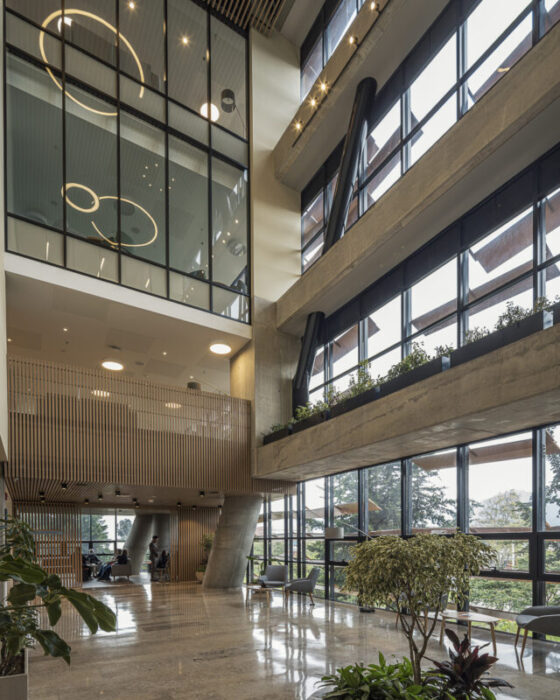
Three interior courtyards represent key Colombian ecosystems:
Courtyard 1: a páramo ecosystem, essential for water production and home to species such as frailejones.
Courtyard 2: xeric ecosystems similar to those of La Guajira and Tatacoa, with dry vegetation and various types of cacti.
Courtyard 3: tropical dry forest, one of the world’s rarest and most endangered biomes.
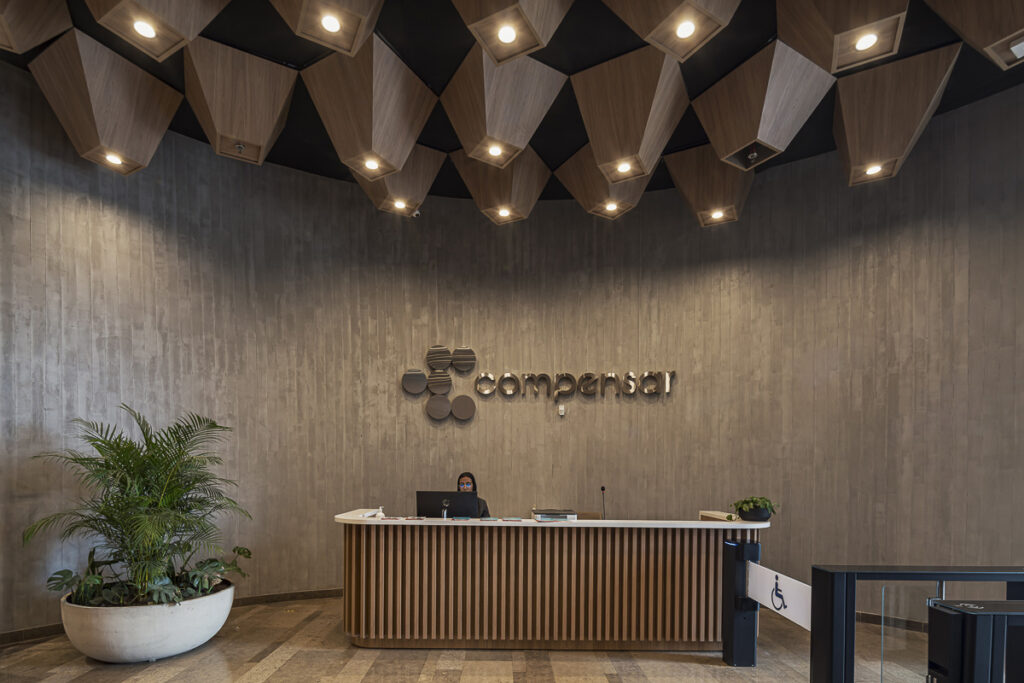
The roof and ground level incorporate endemic savanna vegetation, extending nearby natural systems and functioning as an ecological corridor for migratory birds. The design addresses interior and exterior spaces holistically, prioritizing comfort and intuitive circulation. Vertical mobility is organized according to the building’s two main programs—Day Center and Comprehensive Wellness Center—through three elevators and strategically placed staircases, ensuring accessibility, safety, and operational flexibility.
Client: Compensar
Collaborators: Julian Cortes, Laura Gutierrez, Pablo Negret, Manuela Amado, Mariana Carreño, Santiago Ballen. Interns: Juan Sebastian Rojas, Luisa Velasquez.
Photograper: Alejandro Arango